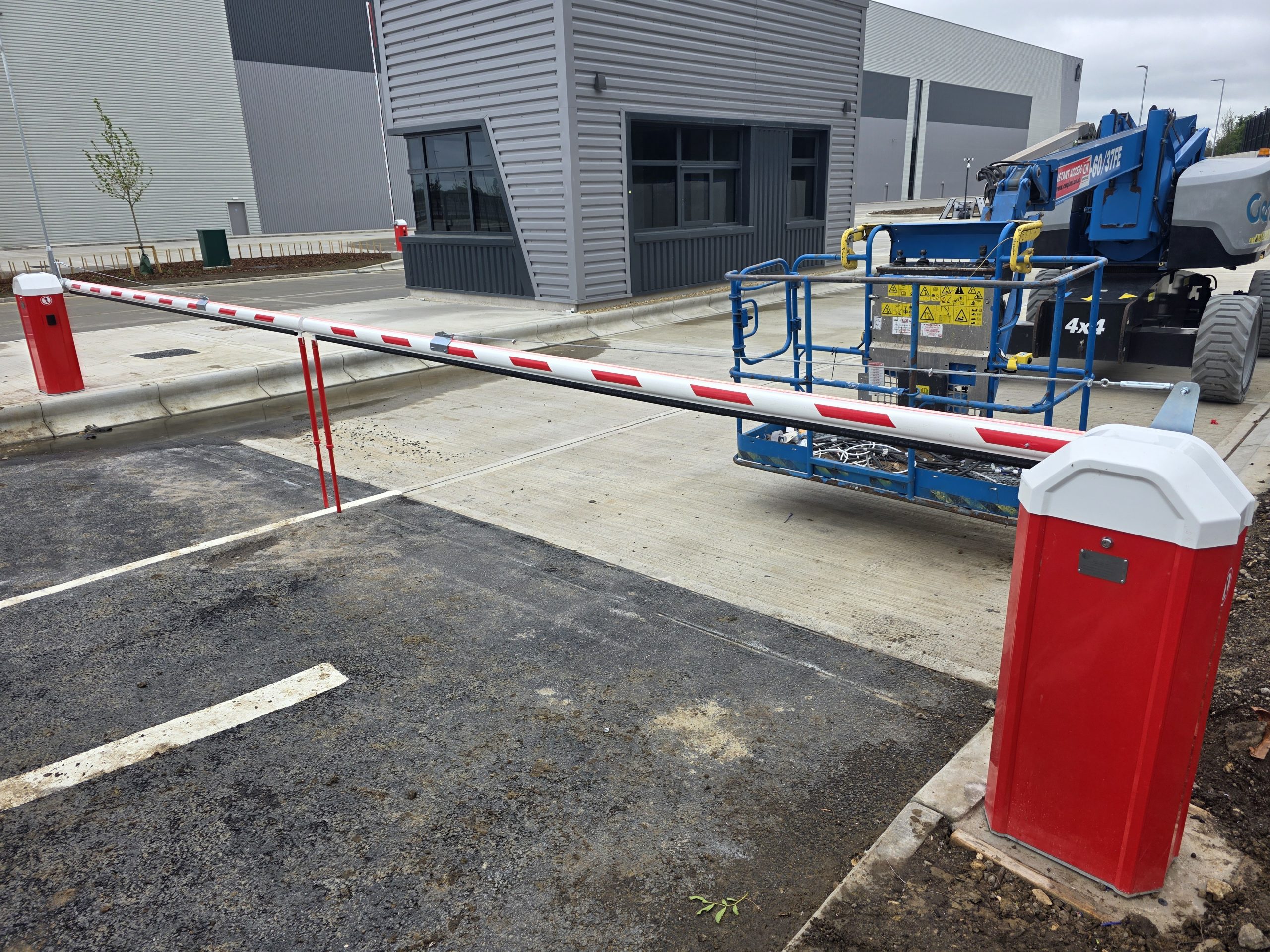
When it comes to managing vehicle access on a commercial site, barriers are one of the most effective and straightforward solutions. They create a clear entry and exit point, help control traffic flow and make it much easier to manage who can access your premises.
For many businesses, one of the first decisions is whether to choose a manual barrier or an automatic barrier. Both can be excellent options, but the right choice depends on how your site operates, how often the barrier will be used and the level of control you need.
In this guide, we look at the difference between manual and automatic barriers, where each option works best and what commercial sites should consider before making a decision.
What Is a Manual Barrier?
A manual barrier is a physical barrier arm that is operated by hand. It is usually lifted and lowered manually by a member of staff, security guard or authorised user.
Manual barriers are commonly used on sites where vehicle access does not need to be controlled constantly throughout the day. They are often a practical choice for quieter entrances, overflow car parks, service roads, private access routes and areas that only need to be opened occasionally.
They offer a simple way to stop unauthorised vehicles from driving onto site without the need for motors, control panels or automated access systems.
What Is an Automatic Barrier?
An automatic barrier is powered and opens or closes using an access control method. This could include push buttons, keypads, fobs, intercoms, ANPR cameras, remote controls or a gatehouse control system.
Automatic barriers are often used on busier commercial sites where vehicles enter and leave regularly. They are ideal for business parks, warehouses, logistics sites, staff car parks, industrial estates, schools and premises with a gatehouse or reception team.
Because the barrier does not need to be lifted manually, it can make access quicker, smoother and easier to manage throughout the day.
The Benefits of Manual Barriers
Manual barriers are a popular choice because they are simple, reliable and cost-effective.
One of the main benefits is that they do not require power to operate. This makes them suitable for areas where electrical supply may not be available or where automation is not needed.
They are also generally easier to install and can be a more affordable option for businesses that need a basic access control solution.
Manual barriers can be particularly useful for:
- Low-traffic entrances
- Private roads
- Overflow car parks
- Temporary or occasional access areas
- Sites where staff are already present to operate the barrier
For businesses looking for a straightforward way to restrict vehicle access, a manual barrier can be a very effective solution.
The Benefits of Automatic Barriers
Automatic barriers are better suited to sites that need a higher level of control, convenience and efficiency.
They allow authorised vehicles to enter and exit without someone having to manually lift the barrier each time. This is especially useful where there is regular traffic, staff parking, deliveries, visitors or contractors arriving throughout the day.
Automatic barriers can also be linked with access control systems, helping businesses manage who can enter and when. This makes them a strong option for sites where security and traffic management are both important.
Automatic barriers can be used with:
- Push buttons
- Keypads
- Fobs
- Intercom systems
- ANPR cameras
- Remote controls
- Gatehouse controls
- Vehicle detection systems
For busy commercial environments, automation can save time, improve traffic flow and reduce the need for manual supervision.
Which Option Is More Secure?
Both manual and automatic barriers can help improve site security, but they do it in slightly different ways.
A manual barrier provides a clear physical restriction. It is a good deterrent for lower-risk areas and can be locked when not in use. However, it relies on someone being available to operate it and manage access.
An automatic barrier can offer more control because it can be connected to access control systems. This means only authorised users can activate the barrier, and in some cases, vehicle movements can be managed more closely.
For sites with higher traffic levels or more security-sensitive access points, an automatic barrier will often provide a more practical and controlled solution.
Which Option Is Better for Busy Sites?
For busy commercial sites, automatic barriers are usually the better option.
If vehicles are entering and leaving regularly, a manual barrier can quickly become inconvenient. Staff may need to leave their post to open and close it, visitors may have to wait, and traffic can build up at the entrance.
Automatic barriers help reduce delays by allowing access to be controlled quickly and consistently. They are particularly useful for:
- Warehouses
- Logistics parks
- Distribution centres
- Office car parks
- Business parks
- Industrial estates
- Schools and colleges
- Sites with deliveries and contractors
Where traffic flow matters, automation is often the more efficient choice.
Which Option Is More Cost-Effective?
Manual barriers are usually the lower-cost option upfront. They are simpler systems with fewer components and do not require the same level of electrical installation as automatic barriers.
Automatic barriers often involve a higher initial investment, especially when combined with access control, safety devices and vehicle detection. However, they can offer better long-term value for busy sites by improving efficiency, reducing manual operation and supporting stronger access control.
The most cost-effective option depends on how the site is used. A manual barrier may be ideal for a quiet entrance, while an automatic barrier may be the better investment for a busy access point.
Safety Considerations
Safety is an important part of any barrier installation.
Manual barriers need to be easy and safe to operate, with suitable locking and support mechanisms where required. Automatic barriers require careful design, installation and testing to make sure they operate safely around vehicles, pedestrians and site users.
Depending on the site, automatic barriers may include safety features such as ground loops, photocells, safety edges, radar detection or other protection devices. The correct safety setup should always be based on the site layout and how the barrier will be used.
Pedestrians should ideally have a separate, clearly marked route away from the vehicle barrier lane.
Maintenance Requirements
Both manual and automatic barriers need maintenance to keep them operating properly.
Manual barriers may need checks on moving parts, fixings, locks, springs and general condition. Automatic barriers require more detailed servicing because they include electrical components, motors, controls and safety systems.
Regular maintenance helps reduce the risk of breakdowns, improves reliability and extends the lifespan of the equipment.
For commercial sites, planned servicing is a sensible way to keep barriers safe, dependable and ready for daily use.
Choosing the Right Barrier for Your Site
The best choice depends on the needs of your business.
A manual barrier may be the right option if your site has low traffic, occasional access, no power supply or a simple requirement to restrict vehicles.
An automatic barrier may be better if your site has regular vehicle movement, staff or visitor access, a gatehouse, access control requirements or a need to improve traffic flow.
Before choosing a barrier, it is worth considering:
- How often vehicles enter and exit
- Who needs access
- Whether the entrance is staffed
- Whether power is available
- The level of security required
- Whether access control is needed
- How pedestrians move around the entrance
- The long-term maintenance requirements
A professional installer can assess the site and recommend the most suitable option.
Manual or Automatic Barrier: Which Should You Choose?
There is no single answer that suits every site.
Manual barriers are simple, reliable and cost-effective, making them a strong choice for quieter areas and occasional use. Automatic barriers offer greater convenience, control and efficiency, making them ideal for busy commercial entrances and sites with regular vehicle access.
In many cases, businesses may even use a combination of both. For example, automatic barriers may be used at the main entrance, while manual barriers control secondary access points or overflow areas.
Speak to Gateway Automation
At Gateway Automation, we supply, install, maintain and repair both manual and automatic barriers for commercial sites across the UK.
Whether you need a simple manual barrier for a private access road or a fully automated barrier system with access control, our team can help design a solution that works for your site.
Contact Gateway Automation today to discuss the best barrier option for your business.