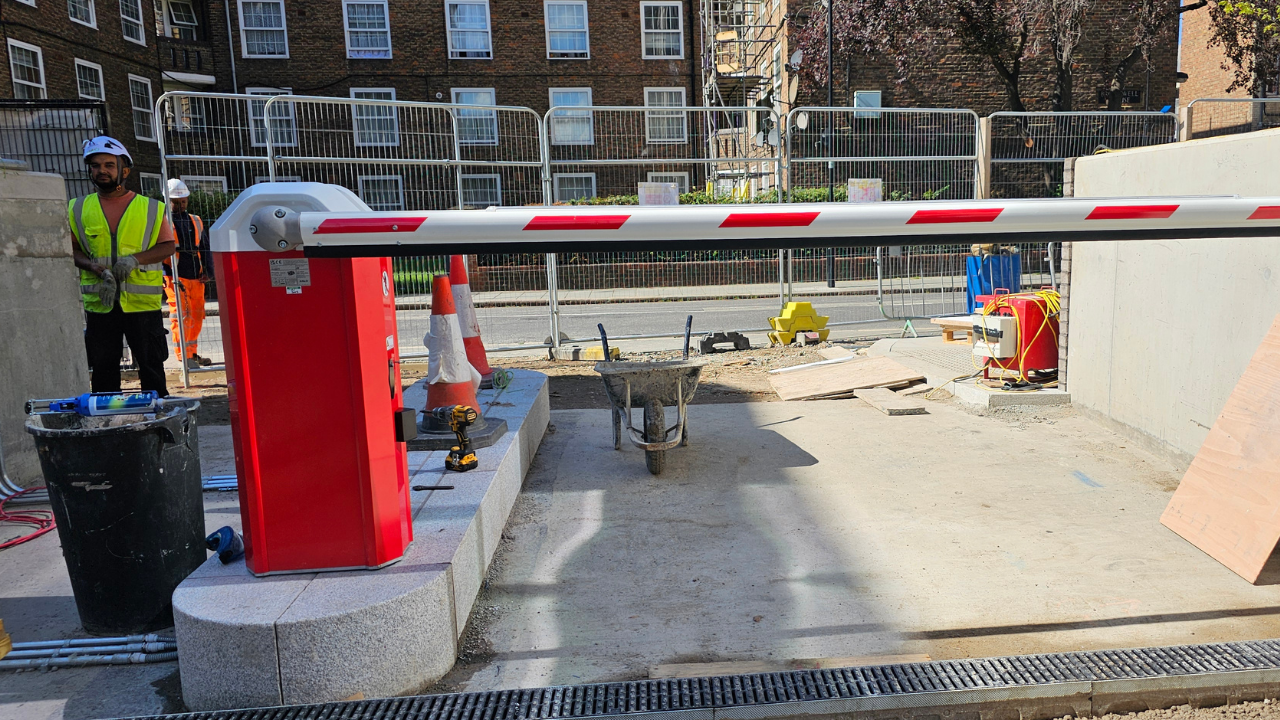
Automatic barriers are a popular and effective way to manage vehicle access across commercial, industrial and private sites. They help control traffic flow, prevent unauthorised entry and improve overall site security.
However, because barriers are moving systems, safety is just as important as security. A correctly installed barrier should not only control access but also help protect vehicles, pedestrians and site users during operation.
In this guide, we explain some of the most common barrier safety features, including safety loops, photocells and safety edges, and why they are important for reliable and safe barrier operation.
Why Barrier Safety Features Matter
Automatic barriers are used in many different environments, including car parks, warehouses, logistics sites, schools, business parks, industrial estates and gated entrances. In these locations, vehicles and pedestrians may be moving close to the barrier throughout the day.
Without the correct safety measures in place, there is a greater risk of impact, damage or injury. Safety features help the barrier detect vehicles, identify obstructions and respond correctly during opening and closing.
A safe barrier system should be designed around the site, the type of traffic using it and how the entrance operates day to day.
What Are Safety Loops?
Safety loops, often known as induction loops or ground loops, are installed beneath the road surface near the barrier. They detect the presence of a vehicle by sensing changes in the magnetic field caused by metal.
When a vehicle passes over or stops on the loop, the barrier control system receives a signal. This can be used to prevent the barrier from closing while a vehicle is underneath the arm, helping reduce the risk of damage.
Loops are commonly used at entrances, exits and gatehouse-controlled sites where vehicles regularly pass through a barrier system.
How Do Barrier Loops Work?
A loop is usually cut into the road surface and connected back to the barrier control panel. Once installed, it creates a detection zone.
When a vehicle enters that zone, the loop detects it and communicates with the barrier. Depending on the setup, this may stop the barrier from closing, trigger the barrier to open, or support the overall safety operation of the system.
Loops are particularly useful because they are positioned directly where vehicles travel, making them an effective way to detect cars, vans, HGVs and other vehicles.
What Are Photocells?
Photocells are another important safety feature used with automatic barriers and gates. They work by sending an invisible beam between a transmitter and receiver.
If the beam is broken by a vehicle, person or object, the system detects an obstruction. This can prevent the barrier from closing or cause it to stop or reverse, depending on how the system has been configured.
Photocells are often installed at low level around the barrier or gate opening to help detect anything in the path of movement.
Why Are Photocells Important?
Photocells provide an additional layer of safety by helping detect obstructions that may not be picked up by other devices. They are particularly useful in areas where pedestrians, cyclists or smaller objects may be present near the barrier.
While loops are mainly used for vehicle detection, photocells help provide broader obstruction detection across the entrance area.
For busy sites, combining loops and photocells can improve the overall safety of the barrier system.
What Are Safety Edges?
Safety edges are pressure-sensitive strips fitted to parts of a moving gate or barrier system where contact could occur. If the safety edge makes contact with an object, vehicle or person, it sends a signal to stop or reverse the movement.
On gate systems, safety edges are often fitted to leading edges, closing edges or areas where there is a potential trapping point. On barrier systems, they may be used depending on the design, risk assessment and installation requirements.
Safety edges are designed to reduce the risk of injury or damage if contact occurs during operation.
Loops vs Photocells vs Safety Edges
Although loops, photocells and safety edges all support safety, they each work in different ways.
Safety loops are mainly used to detect vehicles in the road surface. Photocells use an infrared beam to detect obstructions across an entrance. Safety edges respond when physical contact is made.
In many cases, a safe and reliable barrier system may use more than one safety feature. This layered approach helps improve protection and ensures the system is better suited to real-world use.
All automatic barriers should be fitted with suitable safety measures based on a site-specific risk assessment. There is not one single safety device that is legally required for every installation, but the barrier must be designed and installed so it operates safely for the environment it is used in.
In practice, this means a barrier will usually require at least one primary form of safety, such as laser scanners, safety edges or suitable force limitation. The exact setup will depend on the barrier type, site layout, traffic flow and whether pedestrians can access the area.
Ground loops are commonly used as part of a barrier system to detect vehicles, but they should not be relied on as the only safety measure where pedestrians may be present, as they are not designed to detect people.
Where pedestrians can access the barrier area, additional precautions should be considered, including non-contact safety devices, safety edges where contact risks exist, clear signage and, ideally, a separate pedestrian route away from the vehicle barrier lane.
Choosing the Right Safety Features for Your Site
The correct safety setup will depend on several factors, including:
- The type of barrier being installed
- The width of the entrance
- The volume of vehicle traffic
- Whether pedestrians are nearby
- The speed and frequency of barrier operation
- The type of vehicles using the site
- The surrounding road layout
- Whether the barrier is controlled manually, automatically or from a gatehouse
A professional installer should assess these details before recommending a suitable system.
Safety Features Need Regular Maintenance
Safety devices are only effective if they are working correctly. Over time, loops, photocells, safety edges and control equipment can become damaged, misaligned or affected by wear and tear.
Regular maintenance helps ensure these features continue to operate as intended. During a service visit, engineers can test the barrier operation, check safety devices, inspect wiring, assess the control panel and identify potential faults before they cause a breakdown.
For busy commercial sites, planned maintenance is a key part of keeping barrier systems safe, reliable and compliant with day-to-day operational needs.
Common Signs Your Barrier Safety Features Need Attention
You may need a professional inspection if you notice any of the following issues:
- The barrier closes too quickly or unexpectedly
- The barrier does not stop when a vehicle is present
- Photocells are damaged, dirty or misaligned
- The barrier arm reverses for no clear reason
- Vehicles are not being detected by the ground loops
- The barrier does not respond consistently
- Safety edges appear damaged or worn
- The system is operating intermittently
If your barrier is not working correctly, it is important to arrange a professional repair or maintenance visit as soon as possible.
Professional Barrier Installation and Safety
A safe barrier system starts with the correct design and installation. Safety features should be selected based on the site layout, traffic flow and how the barrier will be used.
At Gateway Automation, we install, maintain and repair automatic barriers and access control systems for commercial, industrial and private sites across the UK. Our experienced engineers can advise on suitable barrier safety features, including loops, photocells and safety edges, to help ensure your system operates safely and reliably.
Secure and Safe Access Control With Gateway Automation
Automatic barriers are an excellent way to manage vehicle access, but they must be supported by the right safety features. Loops, photocells and safety edges all play an important role in helping protect vehicles, pedestrians and site users.
Whether you need a new automatic barrier installation, a safety upgrade, a repair or ongoing maintenance, Gateway Automation can help.
Contact our team today to discuss your barrier safety requirements.