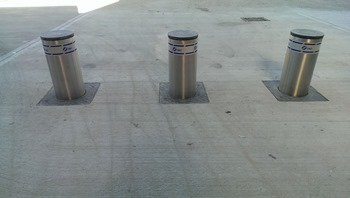
When it comes to bollards, most people see them as simple metal posts quietly doing their job. Stopping vehicles, guiding traffic, or protecting entrances. But because they are tough doesn’t mean they are invincible! Over time, wear and tear can creep in, and before you know it, your once-sturdy bollards are more ‘decoration’ than ‘defence’.
In this blog, we’re diving into the red flags that could mean your bollards are unsafe, rusted, or even condemned; and what you can do to keep them performing at their best.
What Are Bollards (and Why Are They So Important)?
Bollards are short, sturdy posts designed to control or direct road traffic. They are often used in commercial and industrial sites, car parks, and warehouse entrances. Their main job is to protect people, property, and infrastructure from vehicle damage.
Whether they’re fixed, removable, or automatic, bollards play a vital role in perimeter security. When they’re damaged or neglected, that protection can vanish, leaving your site vulnerable to accidents or unauthorised access.
Red Flag #1: Rust and Corrosion
Rust is one of the most common (and dangerous) signs of bollard damage. While a little surface rust might not seem like much, corrosion eats away at the metal’s strength over time.
If you spot flaking paint, bubbling, or orange streaks down the bollard, DO NOT IGNORE IT! Rust can make a bollard unstable, weak, and prone to collapse under impact.
What to do:
Regularly inspect your bollards for signs of corrosion and repaint or treat them with a rust-resistant coating. If the corrosion is severe, replacement might be the safest option.
Red Flag #2: Movement and Instability
A bollard that wobbles like jelly is a giant red flag waving in your face. Bollards should be firmly anchored into the ground. It doesn’t matter if it is in concrete or it is on to a base plate, it must be firm!
If one feels loose, it might mean the foundation has cracked or the bolts have corroded. This can render the collard practically useless, especially if it’s meant to stop vehicles or restrict access.
What to do:
Test each bollard for stability during maintenance checks. If you feel movement, call a professional to assess the foundations before it becomes a safety risk.
Red Flag #3: Damage from Impact
Bollards are built to take a hit, but that doesn’t mean they walk away unscathed! Dents, bends, or cracks from vehicle impacts can drastically weaken their structure.
In severe cases, an impacted bollard may become condemned and require full replacement. Continuing to rely on it could create a false sense of security.
What to do:
Keep records of any impact incidents and have the bollard inspected after each one. If you see deformation or cracks, replace it promptly.
Red Flag #4: Fading Visibility of Missing Reflective Tape
Bollards don’t just protect physically. They also act as visual deterrents. If your bollards have faded paint, missing reflective strips, or are covered in grime, they’re harder to spot, especially in poor lighting or bad weather.
This increases the risk of vehicles accidentally striking them (or worse, striking what they were meant to protect).
What to do:
Keep bollards squeaky clean, repaint them regularly, and ensure reflective tape or LED lighting is intact for maximum visibility to traffic.
Red Flag #5: Broken Automatic Bollards
Automatic or retractable bollards rely on hydraulic, pneumatic, or electrical systems to raise and lower smoothly. If yours are jerky, slow, or stuck in position, that is a major red flag.
These issues could stem from damaged sensors, leaking hydraulics, or electrical faults. All of which compromise both security and functionality.
What to do:
Schedule regular servicing by qualified engineers. Don’t ignore warning lights or sluggish operation. Even small faults can quickly escalate into big issues and expensive repairs.
Red Flag #6: Cracks Around the Base
Even if the bollard itself looks fine, cracks in the surrounding concrete or tarmac can signal a problem beneath the surface. These cracks might be caused by impact, weather erosion, or poor installation.
Left unchecked, they can allow water ingress, rusting the bollard’s internal structure and undermining its stability.
What to do:
Inspect the bare area regularly and seal any cracks immediately. Structural damage to the foundation should be repaired by professionals to prevent collapse.
Red Flag #7: Poor or No Maintenance
It might sound simple, but lack of regular maintenance is the biggest red flag of all. Bollards, like any security system need care to stay effective.
Skipping inspections or leaving small problems to “sort themselves out” can lad to unsafe, rusted, or non-compliant installations. And when safeties at stake, that’s a risk no worth taking.
What to do:
Implement a solid routine for inspections. Ideally every sic months. Check for corrosion, damage, and functionality, and keep a record of all maintenance work.
How to Tell if Your Bollards Are Condemned
If a professional inspection deems a collard structurally unsafe or non-compliant with safety standards, it may be classed as condemned. Continuing to use it could result in liability issues or site safety breaches.
Condemned bollards are often removed and replaced with modern, compliant alternatives, such as automatic rising bollards or heavy-duty steel models that meet today’s impact resistance standards.
Keep Your Bollards Standing Strong
Bollards might not get much attention day-to-day, but they play a huge role in site safety and perimeter security. Spotting these red flags early can prevent damage and dangerous failures down the line.
If your bollards are looking sorry for them selves or a little worse for wear (rusted, broken, or unstable), it might be time for a professional inspection or upgrade.
At Gateway Automation, we provide expert installation, servicing, and maintenance to ensure your site stays safe, secure, and compliant.
Final Thoughts
Don’t let small red flags turn into finishing warning lights! Whether it is a dented post or a rusted base, addressing issues early keeps your bollards (and your property) protected.
Because when it comes to safety, a solid first line of defence is worth it’s weight in steel.
Contact us at Gateway Automation today. Let’s make sure you have complete perimeter security all hours of the day.